The $1.8 Trillion Question: Is Insurance Facing a Crisis or a Catalyst?
Jan 02, 2026
Written by Sabine VanderLinden
-
The Widening Chasm: The global insurance protection gap has swelled to $1.8 trillion, exposing a critical disconnect between economic losses and insured realities as climate-related disasters intensify. There is a growing sense of urgency and crisis within the insurance industry, as these challenges occur with increasing frequency, which may lead to a crisis of confidence or catalyze reinvention.
-
A Tale of Two Gaps: The industry isn’t just facing a financial shortfall. A growing talent and skills gap threatens its ability to innovate and adapt, creating a dual crisis of capacity for every company involved.
-
From Risk to Resilience: The future of insurance belongs to those who transform this capacity gap from a liability into a catalyst for reinvention, adopting new strategies and ways of thinking to ensure the benefits of insurance and innovation reach customers and society.
Introduction
We’re entering an era where the very definition of risk is being rewritten. The insurance industry is facing a crisis of confidence driven by economic volatility, climate risks, and talent gaps. The escalating frequency and severity of extreme weather events, coupled with rapid technological shifts and evolving societal expectations, are challenging the foundational principles of insurance. The result is a growing “capacity gap”—a multifaceted chasm that extends far beyond the balance sheet. This combines the industry’s ability to underwrite risk with its capacity to innovate, attract and retain employees, and ultimately maintain its relevance in an increasingly uninsurable world. There is a clear sense that the life of traditional insurance products and models is under threat, and a new strategy and forward-thinking mindset are required to adapt.
FACT: The protection gap represents the difference between total economic losses and insured losses.
The numbers paint a stark picture
The global protection gap—the difference between total economic losses (money lost) and what is actually insured—has reached an alarming $1.8 trillion [1]. In the first half of 2025 alone, natural catastrophes inflicted $162 billion in economic losses, yet only $100 billion of that was covered by insurance [2]. Climate change is increasing the frequency and severity of natural disasters, leading to higher losses and reinsurance costs. Economic volatility, including inflation, higher interest rates, and potential shifts in GDP, is also affecting demand for insurance products. While this represents a narrowing of the gap in some mature markets, such as the US, it highlights a significant vulnerability in less-developed regions. Asia has the largest protection gap at 82.8%, meaning only 17.2% of total natural-disaster losses are covered [3]. This has a significant impact on local communities and governments, who struggle to obtain adequate coverage and benefits. As an industry, we have an ethical obligation to address this disparity, with 79% of insurance executives agreeing that closing this gap is a moral imperative [1]. Government policies and local initiatives are also critical to addressing the protection gap, as they can help companies and communities access the coverage and benefits they need, though these may be subject to conditions.
But the capacity gap is not just a financial problem.
It’s a human one. The insurance industry is facing a talent crisis, losing experienced employees faster than companies can replace them [4]. A perception problem plagues the sector, making it challenging to attract the next generation of data scientists, AI specialists, and climate risk experts. This skills deficit is compounded by outdated technology and siloed ways of working, which stifle innovation. Double-digit premium increases in 2025 and 2026 have eroded consumer trust, and the customer experience has reached a five-year low due to service shortcomings and slow claims processing. Younger generations exhibit lower levels of trust in the insurance industry, viewing it as outdated and even unethical. The industry is currently facing challenges that undermine consumer trust. The question is no longer whether the industry can afford to change, but whether it can afford not to.
The Anatomy of the Capacity Gap
The capacity gap is not a single issue, but a convergence of pressures testing the limits of the traditional insurance model. To bridge this chasm, we must first understand its constituent parts.

|
Component |
Description |
Key Data Point |
|---|---|---|
|
Financial Capacity |
The gap between economic losses from catastrophic events and the capital available to underwrite them. |
The global protection gap stands at $1.8 trillion [1]. |
|
Human Capital |
The shortage of skilled professionals in data science, AI, and climate risk modeling. As the industry integrates AI technologies, there is a growing need to upskill existing employees to address the talent gap. |
The industry is losing talent faster than it can replace it [4]. |
|
Technological Capacity |
The limitations of legacy systems and the slow pace of digital transformation. |
75% of executives cite outdated tech systems as a significant barrier [1]. |
|
Innovation Capacity |
The struggle to develop and scale new products and business models. |
74% of executives point to a slow rate of innovation as a key limitation [1]. |
Approximately 50% of the current insurance workforce is expected to retire within the next decade, creating a significant talent vacuum. This increases the urgency for the industry to attract and upskill new employees to ensure continued innovation and resilience.
This multi-dimensional challenge requires a holistic response. It demands that we move beyond the traditional role of risk transfer and embrace a new mandate: to become architects of resilience.
The Role of Technology
In today's business landscape, technology is changing the game and rewriting the rulebook. For insurers and financial services firms, adopting new tech isn't about playing catch-up anymore. It's about fundamentally rewiring how you think, operate, and deliver value. Think of it this way: technology has become the difference between companies that shape tomorrow and those that get shaped by it.
Here's where things get interesting — venture clienting is emerging as the smart money's favorite strategy. Picture this: established corporations team up with scrappy early-stage startups to co-develop solutions that neither could crack alone. Take BMW Startup Garage — it's a masterclass in how giants and garage-dwellers can dance together. BMW gets fresh thinking, breakthrough approaches, and technologies that haven't been beaten into submission by committee. The startups? They gain muscle — expertise, resources, and market reach that would take them years to build. This isn't just collaboration; it's innovation with rocket fuel attached.
The insurance world is catching on fast, and for good reason. When insurers partner with startups wielding AI, machine learning, and other cutting-edge tools, magic starts happening. Risk management gets sharper, operations get leaner, and customer service becomes genuinely personal — not just personalized marketing speak. These partnerships don't just generate ideas; they build bridges between "interesting prototype" and "scalable solution that actually works in the real world."
But here's the thing about responsible innovation — it's not about adopting technology because it's shiny. It's about using these powerful tools to tackle the challenges that actually matter: extreme weather resilience, health disparities, and financial inclusion. When companies prioritize sustainable solutions and spread innovation across organizations, industries, and even governments, they're building better businesses and a better world — and that's where lasting value lives.
The technology stack itself is getting wild. Blockchain isn't just crypto hype anymore — implement a blockchain-based payment system and watch transaction costs drop while transparency soars. IoT devices become your eyes and ears, feeding real-time data that transforms risk assessment and claims management from educated guesswork into precision instruments. Cloud platforms give you the scalability and flexibility to launch new services without rebuilding your entire infrastructure. These aren't just tools — they're business model enablers.
Here's the bottom line: technology stopped being just a tool the moment it became a catalyst for complete transformation. Companies that embrace innovative solutions, commit to responsible innovation, and forge strategic partnerships — those are the ones that'll thrive when the dust settles. As our world becomes more connected and complex, your ability to adapt, adopt, and advance new technologies will not only define your competitive edge but also your success. It'll define whether you're leading the next generation or watching from the sidelines.
Bridging the Gap: Innovative Solutions for a Resilient Future
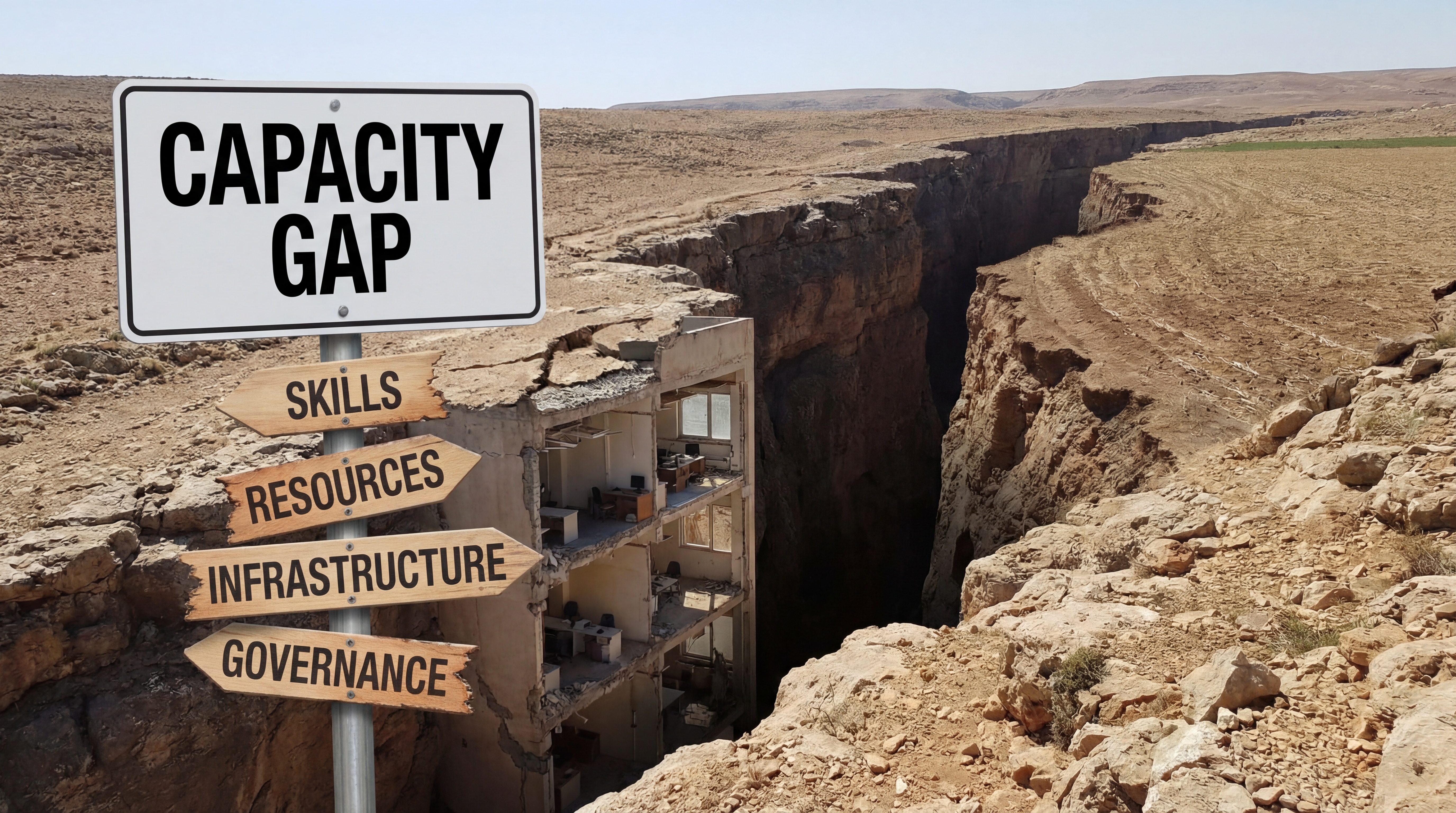
The opportunity—and challenge—is to transform this capacity crisis into a catalyst for profound change. Here is a blueprint for turning the capacity gap into a bridge to a more resilient future:
-
Embrace the Ecosystem: Modern risks are too complex for any single organization to solve alone. Insurers must cultivate ecosystems of collaboration by partnering with startups, technology companies, academic institutions, and public-sector bodies. By leveraging the agility of InsurTechs and the specialized expertise of climate scientists, insurers can accelerate innovation and develop more sophisticated risk models. Partnerships and close collaboration with startups and technology companies are essential to developing innovative solutions that address emerging risks and drive digital transformation.
-
Harness the Power of AI and Data: The future of underwriting is data-driven. AI and machine learning offer unprecedented opportunities to understand better and price risk, from predicting wildfire paths to assessing supply chain vulnerabilities. By investing in these technologies, insurers can move from reactive to proactive, offering personalized pricing and promoting risk-reducing behaviors. 74% of companies have deployed some form of AI, yet many remain cautious about further investment, with 60% of CEOs hesitant due to liability and unclear return on investment. By 2030, the insurance industry is expected to be significantly influenced by AI and automation. AI is transforming the insurance industry by automating underwriting and claims processing, which can significantly enhance customer satisfaction by reducing processing times from weeks to minutes. However, widespread automation in underwriting and claims processing will also displace many traditional roles in the industry. Insurers are modernizing their core systems with cloud-native and AI-native solutions to adapt to the AI revolution. AI systems need to be transparent, explainable, and fair to minimize risks and comply with regulations.
-
Reimagine Product Innovation: The one-size-fits-all policies of the past are no longer sufficient. The industry must accelerate the development of innovative products like parametric insurance, which offers rapid, transparent payouts based on predefined triggers. New risks from climate change and the gig economy are driving demand for innovative insurance products like parametric insurance. These products can play a crucial role in closing the protection gap, particularly in developing countries where traditional loss assessment is challenging. The shift to autonomous vehicles is also expected to reduce accident frequency, significantly impacting auto insurance premiums.
-
Invest in Human Capital: Technology is a powerful enabler, but the industry’s most valuable asset remains its people. To bridge the skills gap, insurers must invest in upskilling and reskilling their workforce while creating a compelling value proposition to attract new talent. The talent required for AI implementation is evolving, necessitating upskilling existing staff and hiring new roles. This means fostering continuous learning, embracing flexible work models, and demonstrating a clear commitment to purpose.
-
Champion a Culture of Prevention: The most effective way to close the capacity gap is to reduce the risk that must be insured. This requires a fundamental shift from simply paying claims to actively promoting resilience. By incentivizing climate-resilient infrastructure and educating customers on risk mitigation, insurers can create a virtuous cycle of lower losses and greater affordability. Insurers are increasingly focusing on proactive risk management using data from IoT for loss prevention.
A hybrid strategy—combining internal capability building with partnership and collaboration with startups and tech giants—is increasingly favored by many insurers to enhance innovation. Companies are adopting this approach to balance the speed and flexibility of external startup solutions with the control and integration of in-house development. Insurers work closely with startups through venture client models to integrate innovative startup solutions into their operations, while venture capital plays a crucial role in funding startups focused on insurance innovation. This hybrid strategy enables insurers to modernize their core systems, accelerate adoption of new technologies, and remain competitive in a rapidly evolving landscape. Despite these challenges, the global insurance industry is expected to grow steadily, with the U.S. general insurance market projected to surpass $3 trillion by 2027.
Who Will Lead the Change?
The path forward will not be easy. It will require bold leadership, a willingness to challenge long-held assumptions, and a shared commitment to a common purpose. New thinking and a sense of urgency or optimism are essential for companies seeking to lead the industry through this transformation. The $1.8 trillion capacity gap is not just a number on a balance sheet; it represents the vulnerability of our communities, the fragility of our economies, and the future of our planet.
Just as Silicon Valley has shown how innovation ecosystems can reinvent entire sectors, insurance companies must embrace the full life cycle of transformation—recognizing that innovation's life cycle involves growth, adaptation, and renewal. The real question isn’t whether the insurance industry can afford to bridge this gap—it’s whether we can afford not to. Transformation isn’t a future goal. It’s the present tense of progress. Are you ready to lead that change?
Sources
[1] SAS & Economist Impact. (2025, February 25). Survey: 78% of insurance execs say closing $1.8 trillion protection gap is an ethical obligation.
[2] World Economic Forum. (2025, August 8). Climate events have cost $162b in 2025. Insurance covered most.
[3] MAPFRE. (2025, November 17). Asia and Latin America show the largest gaps in insurance protection.
[4] Insurance Journal. (2025, March 24). The Insurance Industry's Talent Crunch: Attracting and Retaining Young Talent.
Frequently Asked Questions (FAQs)
What is the insurance capacity gap?
The capacity gap refers to the growing disparity between total economic losses from events such as natural disasters and the amount of insurance coverage. It also encompasses talent shortages and technological innovation within the insurance industry, which limit its ability to respond to emerging risks.
Why is the capacity gap growing?
The capacity gap is widening due to the increasing frequency and severity of climate-related events, the growing concentration of assets in high-risk areas, and the insurance industry's struggle to keep pace with technological change and attract new talent.
How can the insurance industry close the capacity gap with new business models?
Closing the capacity gap requires embracing new technologies such as AI and data analytics, fostering collaboration with startups and other partners, developing innovative products such as parametric insurance, investing in talent, and shifting the industry's focus from risk transfer to risk prevention and resilience.
Editor in Chief

Rebuilding Risk Resilience