The Executive Brief: Main Outcomes and Conclusions from ITC London 2026
Jan 31, 2026
Written by Sabine VanderLinden
Introduction
The Insurtech Connect (ITC) London 2026 conference took place over 26–27 January 2026 in London. The event distilled key intelligence gathered across two days of debate, discussion, and discovery, with sessions featuring lively debate on the most pressing issues facing the industry. More than 650 executives, innovators, and investors from global insurers, brokers, startups, and technology companies met to discuss the future of insurance and the ways data, artificial intelligence (AI), and new partnerships can close the industry’s capacity gap—the growing mismatch between the volume of work and the people available to do it.
Sessions spanned keynote presentations, panels and challenge labs, and participants emphasised that success in insurance will depend on human‑centric digital transformation, trusted data ecosystems, iterative innovation and purpose‑driven partnerships.
This brief is intended for insurance executives, innovators, and investors seeking actionable insights from ITC London 2026 to inform their strategic decisions. It provides the most important takeaways for insurance industry leaders.
London’s Insurance Community
London stands as a global epicenter for senior insurance and insurtech leaders, where the convergence of tradition and innovation fuels the industry’s ongoing transformation. At the heart of this dynamic ecosystem is ITC London, an invite-only conference that brings together executives, innovators, and thought leaders to discuss the future of insurance. Here, the focus is on leveraging artificial intelligence, automation, and data-driven strategies to deliver a superior customer experience and secure a lasting competitive advantage.
Within London’s insurance community, data has become the new currency—powering decision-making, enabling proactive execution, and supporting the development of AI agents that augment human expertise. Insurtech leaders and established insurers alike are committed to a customer-first approach, using technology to anticipate needs, streamline processes, and redefine what success looks like in a rapidly evolving market. The community’s commitment to transformation is evident in its willingness to invest in research, development, and the adoption of cutting-edge solutions that put customer experience at the center of every initiative.
Collaboration is a defining feature of London’s insurance landscape. Organizations such as Insurtech UK play a pivotal role in fostering connections, supporting knowledge exchange, and driving collective progress. Executives regularly gather to discuss emerging trends, share actionable insights, and support one another in navigating the complexities of digital transformation. This spirit of partnership extends to the city’s vibrant startup scene, where insurtech founders and established players work side by side to convert innovative ideas into operational impact.
London’s insurance market is also a magnet for investment, attracting significant interest from venture capitalists and global investors eager to back the next wave of insurtech success stories. The city’s unique blend of talent, capital, and industry expertise creates fertile ground for startups and scale-ups to thrive, while established firms benefit from a steady influx of new ideas and capabilities.
As the industry continues to evolve, London’s insurance community remains committed to leading the way—focusing on customer-first innovation, harnessing the power of AI and automation, and executing with discipline and agility. This proactive, collaborative approach ensures that London not only adapts to change but actively shapes the future of insurance, setting new standards for excellence, resilience, and growth in the UK and beyond.
Human–AI collaboration and the capacity gap
Adopting “agentic” AI to augment people
A central theme was that AI must amplify human potential rather than replace it. Leaders from carriers, including AXA XL, explained that 82 % of business leaders planned to invest in AI agents over the next 12–18 months, but warned that simply layering AI on top of old processes will fail. Participants urged insurers to take a human‑centred approach by combining AI with behavioural science and process redesign so that underwriters, brokers, and claims handlers can focus on high‑impact analysis rather than re‑keying information. Effective control over AI-driven transformation requires addressing both technological and human factors to ensure stability and desired outcomes. Mosaic’s case study showed how building a data‑first underwriting platform allowed brokers to receive near‑real‑time responses: brokers spent more time with clients while automation handled routine tasks.
Addressing the “front door” bottleneck
Several panels said the industry has not yet solved the “front door” of insurance—data ingestion, submission triage, and onboarding. Speakers noted that 40‑50 % of risk submissions arrive incomplete and that AI and automation must be embedded into existing systems to raise throughput. Current industry practice shows that AI initiatives often stall due to poor data quality and ownership issues, highlighting the need for robust data management. A virtual‑agent pilot shared during the AI panel processed broker queries 99 % automatically, reducing response times from 24 hours to 1 minute and saving ~50 % of administrative costs within five weeks. The ability to alleviate this capacity gap resonated across sessions and was echoed in closing remarks, which urged attendees to “build solutions as a team” and “use technology to let people do more”.
Guarding against bias and building trust
While many discussions centred on generative AI, high‑authority news sites cautioned that the industry risks amplifying human biases. An article from FF News summarising the event noted that the industry is “hyper‑focused on AI bias” and argued that AI can act as a bias‑corrector, but only if data sets are diverse and human biases are acknowledged. Thus, governance, ethics, and transparency remain critical. As the practice of integrating AI into insurance workflows evolves, maintaining trust and transparency will be essential.

Data quality and the digital front door
Data is the new currency of competitive advantage in the insurance industry.
Elevating data as a strategic asset
Ashok Krishnan (AXA XL) emphasised that, after decades of mergers, insurers’ data reside in disconnected legacy systems. To deliver next‑generation underwriting and claims, data quality, ownership, and standardisation must become strategic pillars. Clear account and responsibility for data ownership and stewardship are essential, especially given legal and regulatory requirements around data use and protection. Companies are investing in data lakes and API‑driven platforms to unify submission, premium, risk, and claims data. These platforms increasingly integrate web-based data sources to enhance data completeness and accuracy. Mosaic’s hybrid insurer model uses a data lake and API connectivity to ingest broker submissions and syndicate partners’ information, enabling more accurate risk selection and portfolio management. Better data not only improves underwriting but also reduces friction and costs—one session estimated that a 1 % improvement in the claims ratio could save US$250 million and more in the Lloyd’s market.
Unifying context for underwriting
Underwriters do not just assess raw data. They weigh context such as broker relationships, historical conversations, and delegated authority agreements. A live podcast with Cytora, an Applied Systems company, highlighted that AI agents must capture all layers of context—submission data, internal agreements, and communications—to replicate human reasoning. Without unstructured communication (e.g., emails, phone calls), AI cannot explain why underwriters made certain decisions. The discussion advocated a “dynamic view of risk” where data and context flow through the underwriting, distribution, and claims lifecycle to enable fully agentic workflows.
Cleaning data reduces duplication
The delegated authority (DA) panel noted that the London market suffers from duplicated data entry across multiple systems. Lloyd’s modernisation strategy (“DA 2.0”) aims to create a single collaboration environment so every stakeholder enters data once, reducing manual effort and error. Panellists estimated that 24 % of underwriters’ time is spent on non‑value‑added tasks; merging premium, risk, and claims data and standardising formats could free up this capacity. There are numerous examples of successful data transformation in the insurance industry, such as firms consolidating legacy systems or implementing real-time data integration to streamline claims processing and improve customer experience. This aligns with the overall push to fix the industry’s front door and make underwriters more productive.
Innovation structure and culture
The insurance industry has reached a tipping point, requiring a shift from strategy to urgent execution.
Building innovation with discipline
OneAdvent summarized in an article a panel moderated by Melissa Collett, which concluded that innovation requires structure and persistence: companies need disciplined processes, strong data foundations, and incremental progress rather than chasing the latest technology. Leaders urged participants to start with the problem, not the technology, and to create safe environments for experimentation that recognise the consequences of failure. Greenlight Re and Lloyd’s executives noted that innovation should be embedded in the core insurance business rather than treated as a separate lab or token initiative. Modern approaches to innovation are redefining roles and expectations within insurance organisations, emphasising the need for operational impact and sustainable change.
Cultural change and leadership
Speakers throughout the conference stressed that digital transformation is as much about culture as technology. Louise O’Shea (CEO of CFC) told attendees that the insurance sector must adopt a culture of continuous innovation: experiment with AI, move away from theory, and be willing to fail quickly. She warned of the risks of complacency, citing Kodak’s decline. Leaders must reimagine business models and allocate resources to new ecosystems rather than maintaining the status quo. This cultural shift requires empowering employees with skills, encouraging cross‑functional collaboration, and building trust across the ecosystem. Innovation practices have been influenced by external trends and industry leaders, further accelerating the need for cultural transformation.
Partnerships, scaling, and investment
Not all partnerships in the insurance sector are created equal, as some startups and incumbents are building high-impact alliances.
Buy to build
The choice between building proprietary technology and buying off‑the‑shelf solutions surfaced repeatedly. In the Cytora podcast session, called Making Risk Flow, Juan de Castro, proposed a “buy to build” strategy: carriers should purchase generic digital building blocks (data ingestion, workflow automation) and build bespoke capabilities (pricing, underwriting algorithms) for differentiation. Self‑service platforms like Cytora allow carriers to create data models tailored to their risk appetite while reducing time‑to‑value. Certain partnerships represent new models of collaboration and innovation, specifically those that combine startup agility with incumbent scale to accelerate digital transformation.
Clear separation between investment and partnerships – In Session 6, panellists advised insurers to separate investment arms from partnership teams so early‑stage collaborations aren’t judged solely on financial return. Flexible playbooks and open dialogue (e.g., picking up the phone to resolve issues) make it easier for large insurers to work with nimble startups. This fosters trust and ensures that proof‑of‑concept projects align with corporate strategy. Teams must decide on the most effective partnership structures to maximise both innovation and operational impact.
Scaling through patient partnerships
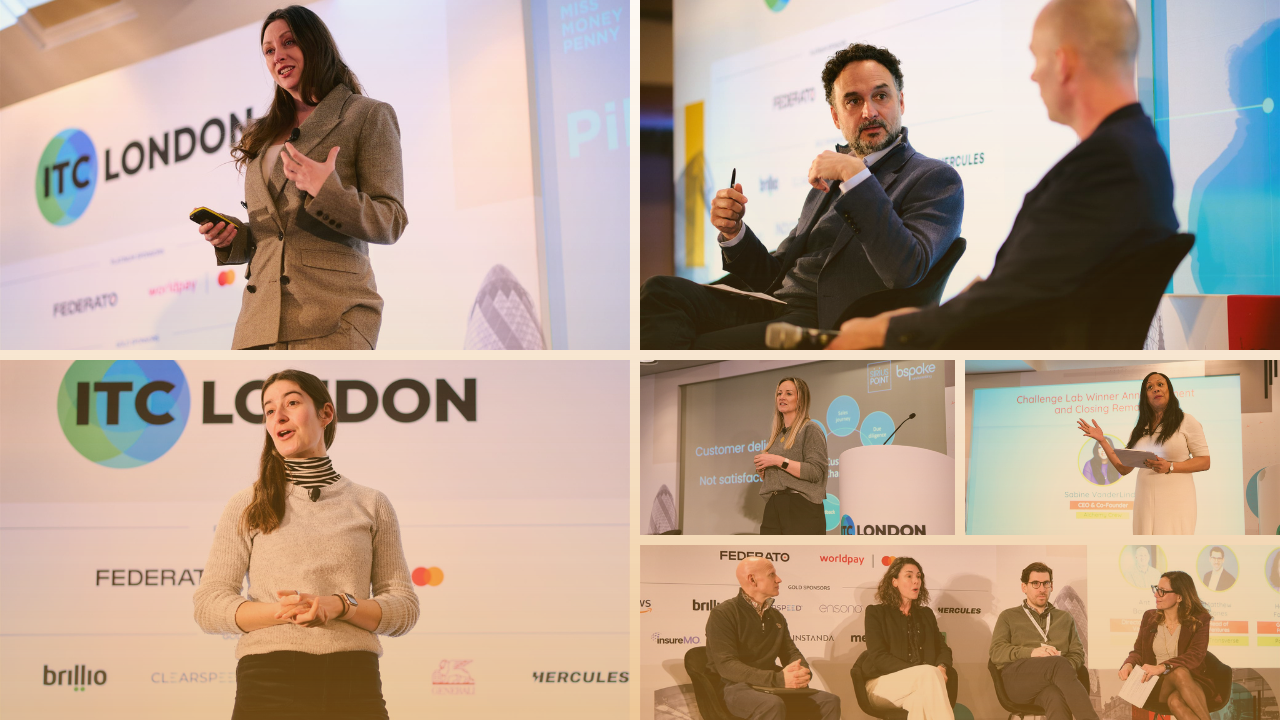
The session on Insurtech Journeys: From Product to Profit provided candid lessons on scaling. Clare Dodd (Empathy UK) said that aligning user experience and ROI with insurer partners early is essential. She spent nine to twelve months in procurement and suggested designing solutions around existing processes. Janthana Kaenprakhamroy (Tapoly) admitted to underestimating the complexity of the insurance value chain and highlighted the need for resilience amid market swings. Sam Fromson (YuLife) emphasised that choosing investors and partners is like a marriage; values alignment and long‑term support matter more than short‑term capital. Iryna Chekanava (Chaucer) cautioned insurtechs against overestimating their addressable markets. Insurers appreciate realism and honesty. High‑authority reporting added that good investor relations and patience are key. There is a diversity of opinion on what makes a successful partnership, with some specifically pointing to alliances that integrate technology and distribution as most effective. There is no single silver bullet for customer acquisition—SEO and partnerships often outperform pay‑per‑click campaigns.
Sustainability and purpose
Insurance as a force for good
The conference’s Challenge Lab focused on sustainability and social impact. Danilo Raponi (Generali) remarked that sustainability is integral to Generali’s strategy and that insurance can be a force for good by addressing climate change and demographic shifts. Integrating ESG goals directly into underwriting is essential for sustainability in the insurance industry. The winning startup Senen (focused on climate resilience) underscored this purpose. The discussion also highlighted the importance of supporting life and human dignity through sustainable insurance practices, with women playing a key role in driving sustainability and innovation within the insurance sector. Closing remarks reiterated that partnerships should start with the problem and that inclusive growth and stakeholder‑centric innovation are the future, reflecting the growing demand for sustainable and socially responsible insurance solutions. High‑authority sources also linked innovation to parametric hail covers and real‑time aircraft tracking, showing that new products can address climate‑related risks while advancing data discipline.
Conclusions
ITC London 2026 signalled a clear shift from proof‑of‑concept to execution at scale. Several initiatives were carried forward from the event, demonstrating a commitment to real-world impact beyond the conference. The key outcomes were:
-
AI is table stakes, but must be embedded into existing workflows and combined with human judgment to alleviate the capacity gap. Those who invest in trustworthy data and robust automation will unlock efficiency, enabling staff to focus on client relationships and complex analysis.
-
Data quality and context are non‑negotiable. Without unified, clean data and context‑rich workflows, AI cannot deliver value. Standardisation, single collaboration environments, and dynamic risk views are critical to underwriting discipline and cost reduction.
-
Innovation demands structure and cultural change. Companies must start with the problem, embed innovation in their core business, and create environments that encourage experimentation but remain disciplined. Leadership should champion new models and avoid complacency.
-
Scaling requires patient partnerships. Early‑stage insurtechs and carriers must align values, be honest about growth prospects, and co‑design solutions. Procurement cycles are long, but resilience and mutual understanding yield sustainable growth.
-
Purpose matters. Sustainability, demographic trends, and social impact are inseparable from profitable growth. The industry’s emerging narrative positions insurance as a platform for resilience and inclusivity.
The presence of key stakeholders and thought leaders in every room—whether the Roundtable Room, Workshop Room, or main stage—was highly instrumental in driving meaningful dialogue and collaboration. Notably, half of the participants represented organizations that have already begun transitioning from pilot projects to scaled adoption, marking a significant departure from past events where most discussions remained theoretical. The importance of the word—how language, definitions, and shared terminology shaped consensus—was evident in the event’s conclusions and the industry’s evolving direction.
ITC London 2026 also recognized the Challenge Lab participant who delivered the most compelling solution to Generali's brief, underscoring the event’s focus on actionable outcomes.
For venture clients and executives, the message is clear:
-
invest in data and AI capabilities, cultivate a culture of continuous innovation,
-
forge disciplined partnerships, and
-
align products with purpose.
Those who lead on these fronts will shape the next generation of insurance and capture opportunities opened by technology and changing societal needs.
Looking forward to seeing many of you at ITC Europe in May, ITC Vegas in September, and ITC London Next January 2027
ITC London: FF News Why the “Future of Insurance” is a Cultural Debt, Not a Tech Deficit
ITC London: FF News Insights on Insurance and AI
ITC London: OneAdvent - Embedding Innovation from Within – ITC Europe
ITC London: OneAdvent - Insurtech Journeys: From Product to Profit at ITC London
Editor in Chief

Rebuilding Risk Resilience